TERM OF REFERENCE
Capacity Building of Leaders
in Waste Management and Sustainable Community-Based Tourism Management
in the Tenasserim Corridor, Ratchaburi Province
Supervised by: On-iriya Fugthaworn
Duration: September 2025 - May 2026
Major Responsibilities
The consultant/s will develop a strategic plan to promote the conservation and management of tourism in Pha Pok village. This also includes the capacity building of youth environmental leaders in Tako Lang village, which encompasses both Tako Pidthong and Tako Lang villages. Therefore, a capacity building for community waste and environmental management leaders, as well as the development of sustainable community-based tourism in the Tenasserim Corridor, Ratchaburi Province, aims to concretely support the implementation of the proposed initiatives.
Background
Based on the socio-economic survey conducted in late 2024 in two communities within the Tenasserim Corridor—specifically Pha Pok and Tako Pidthong villages in Tambon Suan Phueng, Suan Phueng District, Ratchaburi Province—data was systematically collected and analyzed to identify development opportunities and gaps. The study also developed community-driven proposals aimed at enhancing local well-being through participatory approaches. The survey revealed that most of the area is designated as a conservation zone and is linked to national security due to its proximity to Myanmar. Most residents do not own land, which affects forest land management and utilization, as it is subject to various legal protections.
The Suang Phueng sub-district, located near Bangkok, stands out as a significant tourist destination with notable development potential and opportunities. A strategic development goal has been outlined to position the area as "a hub for organic agriculture and ecotourism, emphasizing sustainability through the conservation of natural resources, particularly forests and watershed areas."
There have been recommendations to enhance conservation efforts and improve tourism management in Pha Pok village—particularly around the Mon Market in Huai Nam Sai—where a drop in visitor numbers has been observed, largely due to the absence of a structured tourism management system and inadequate support for local waste management initiatives. At the same time, there is a recognized need to build the capacity of youth environmental leaders in Tako Lang village, which includes both Tako Pidthong and Tako Lang villages. These initiatives should leverage the existing social capital within the community, prioritizing activities with strong development potential and leaders who are motivated and ready to contribute.
Work location
Moo 8, Tako Lang and Tako Pidthong villages and Moo 3, Pha Pok village, Suan Phueng Sub-district, Suan Phueng District, Ratchaburi.
Scope of Work
|
No.
|
Activity
|
Method
|
Expected Outcome
|
|
Target Area: Baan Tako Lang School, Tako Lang village, and Tako Pidthong village (Village No.8)
Target Group: School administrators, teachers, students, school cleaning staff, Tambon Administrative Organization (TAO), local government officials, village headman, community, and relevant partner organizations.
|
|
1.
|
Planning and Preparation Meeting
|
Provide explanations and clarify understanding for school administrators, the Tambon Administrative Organization (TAO), and relevant stakeholders.
|
Relevant stakeholders understand and are informed of the procedures, and collaboratively design a training workshop that aligns with the local context.
|
|
2.
|
Survey Waste Quantity and Composition
|
Conduct a workshop and field survey to collect baseline data on the quantityand composition of waste, local resources/ capacity, analyze problems, and identify challenges and limitations in waste management at the school.
|
Experience in waste management at Baan Tako Lang School including Tako Lang and Tako Pidthong villages.
|
|
3.
|
Workshop 1: Building Understanding of Integrated Waste Management
|
Provide knowledge and examples to create an understanding of integrated waste management, including hands-on training in waste segregation.
|
The target group gains knowledge of waste components and how to properly segregate waste.
|
|
4.
|
Workshop 2: Enhancing the Potential of Youth Leaders in Eco School
|
Provide training on the concepts and development towards becoming an Eco School i.e. Youth Capacity Building and School Waste Management for a Sustainable Future
|
Student leaders gain knowledge, understanding, and awareness of environmental issues and play a role in the protection, restoration, conservation, and sustainable use of the environment for local development.
|
|
5.
|
Prepare the report
|
Collect, analyze, and summarize the results of the activities, along with recommendations for future actions.
|
- A draft report to be submitted to WWF and finalize based on feedback from WWF, local communities, and other relevant partners of WWF (e.g. donor, partner agency) on or before 15th May 2025.
- A comprehensive final report will be delivered on or before 30th May 2025.
|
|
Target Area: Mon Market, Huai Nam Sai, Pha Pok (Village No.3)
Target Group: Community committee and leaders, vendors, tourism activity owners, Community entrepreneurs, residents, and relevant partner agencies/network members
|
|
No.
|
Activity
|
Method
|
Expected Outcome
|
|
1.
|
Community Committee capacity building
|
1.1 Capacity building workshop for community committee
1.2 Community Committee meeting
|
The committee gained knowledge and understanding of sustainable tourism management, the club’s rules and regulations, and joint agreements, as well as the monitoring and promotion of community-based tourism initiatives led by the committee at the Ban Mon Market, Huai Nam Sai.
|
|
2.
|
Tourism activities development
|
Tourism activities training and testing
|
Tourism activities are developed and available for tourists
|
|
3.
|
Study on tourists’ satisfaction on tourism services
|
Satisfaction survey collection
|
The results of tourist satisfaction surveys at Ban Mon Market, Huai Nam Sai, will be used to inform and guide the development of the tourism site.
|
|
4.
|
Enhance the collaboration of organizations, partners, networks to drive tourism
|
Organize meetings, consult, and implement activities collaboratively
|
Collaboration and participation among agencies and partner networks have emerged to support community-based tourism in the area.
|
|
5.
|
Summarize the lessons learned
|
Organize a meeting to monitor progress and summarize project lessons learned
|
Report on project implementation, challenges and obstacles, monitoring and support efforts, and lessons learned.
|
|
6.
|
Prepare the report
|
Collect, analyze, and summarize the results of the activities
|
- A draft report to be submitted to WWF and finalized based on feedback from WWF, local communities, and other relevant partners of WWF (e.g. donor, partner agency) on or before 15th May 2025.
- A comprehensive final report will be delivered on or before 30th May 2025.
|
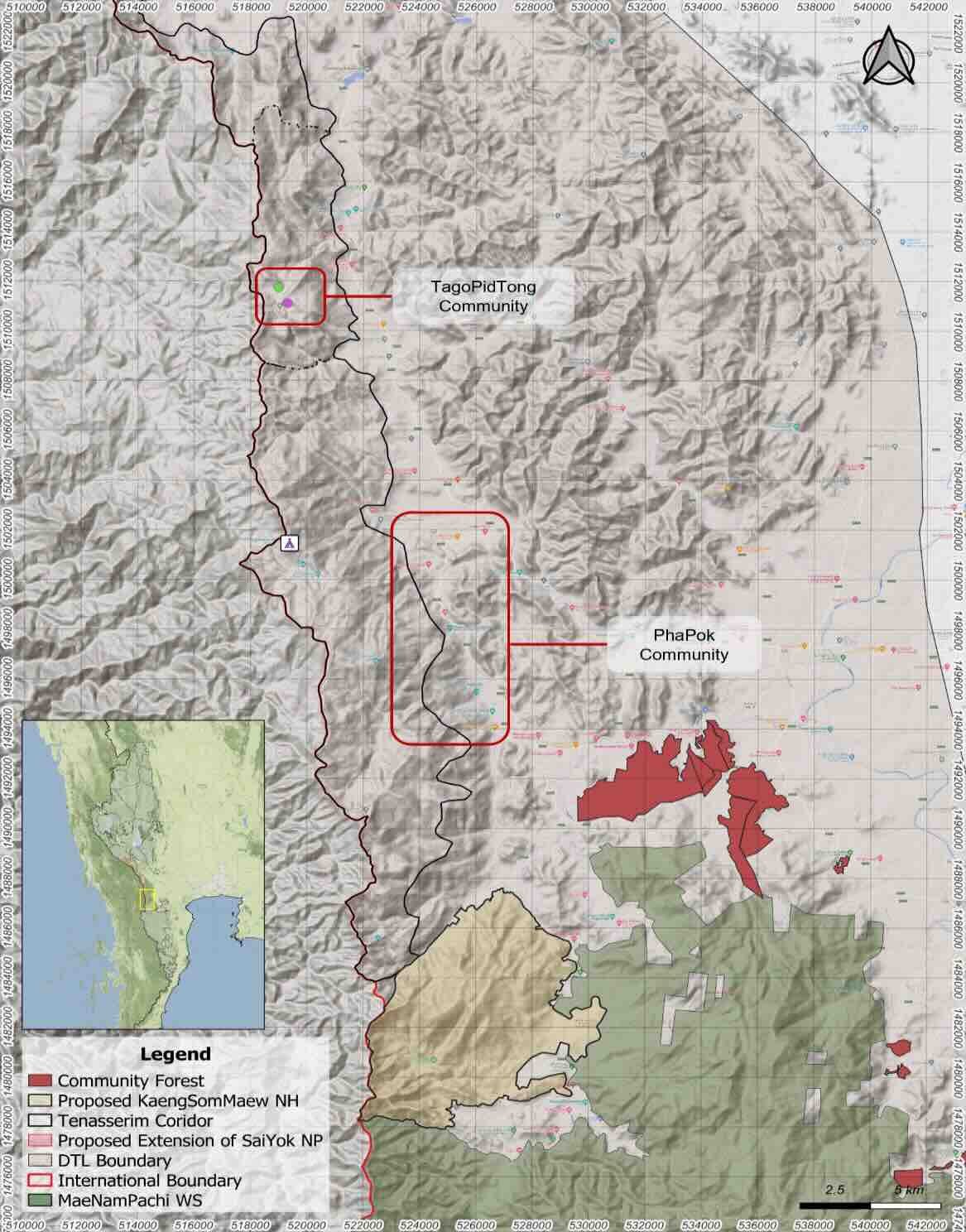
| Map of two target communities |
WWF Support
Interested consultants are invited to submit their Proposal within 20 August 2025
To warissaras@wwf.or. , oniriyaf@wwf.or.th Cc. procurement@wwf.or.th
The subject line of the email must be marked with “ Capacity Building of Leaders
in Waste Management and Sustainable Community “
.png)
.jpg)