แอมเนสตี้เรียกร้องไทยยุติแผนการบังคับส่งกลับชายชาวอุยกูร์ 2 คนไปยังประเทศจีน
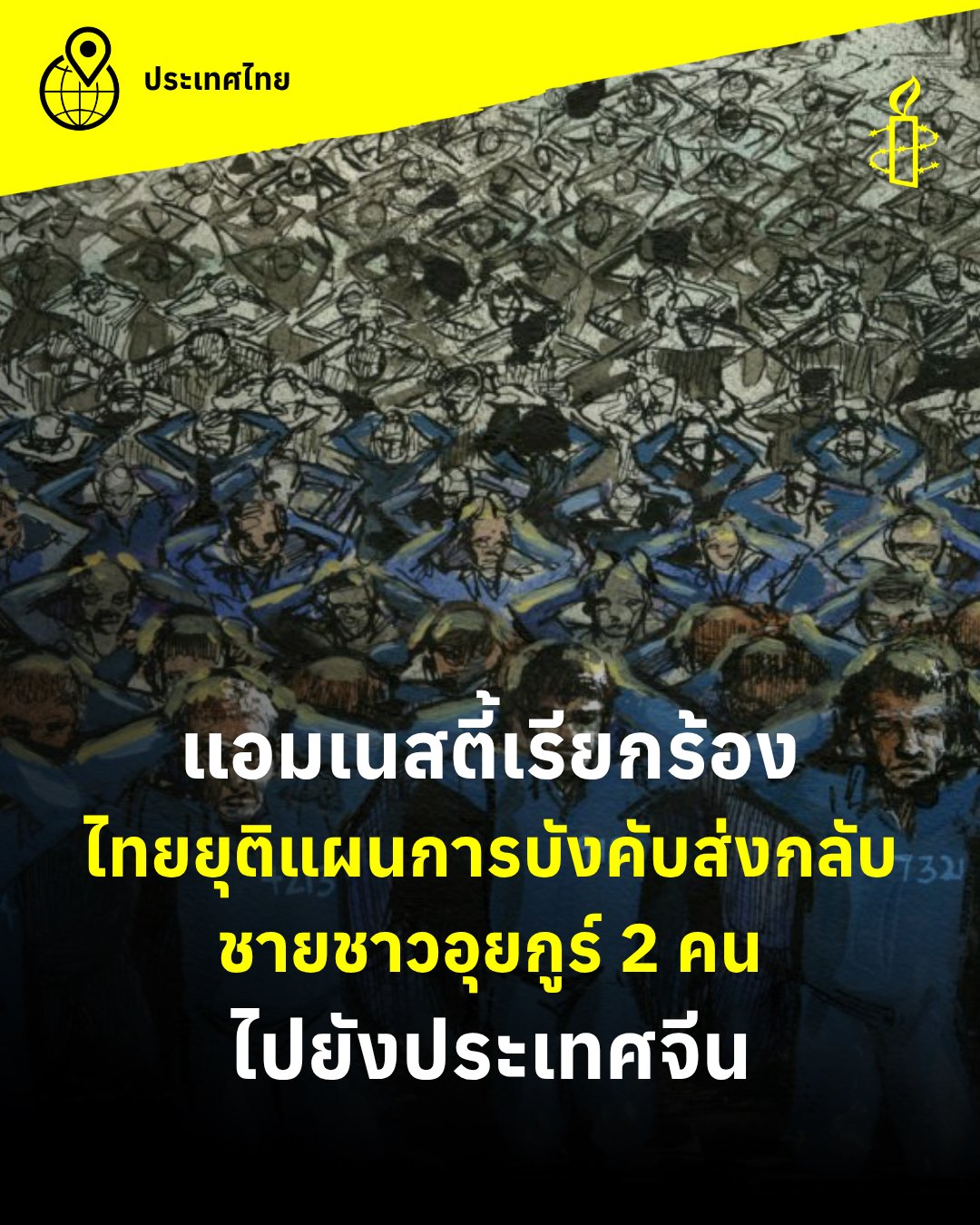
แอมเนสตี้เรียกร้องไทยยุติแผนการบังคับส่งกลับชายชาวอุยกูร์ 2 คนไปยังประเทศจีน
สืบเนื่องจากรายงานว่ามีการนำตัวชายชาวอุยกูร์ 2 คน เข้าควบคุมตัวไว้ในสถานกักตัวคนต่างด้าวในประเทศไทย โดยมีความเสี่ยงที่พวกเขาจะถูกบังคับส่งตัวกลับไปประเทศจีน
แอกเนส คาลามาร์ด เลขาธิการแอมเนสตี้ อินเตอร์เนชั่นแนล กล่าวว่า ทางการไทยต้องยุติแผนการใดๆ ที่จะบังคับส่งกลับชายชาวอุยกูร์ทั้ง 2 คนไปยังประเทศจีนทันที เนื่องจากมีความเสี่ยงที่พวกเขาจะต้องเผชิญกับการทรมาน การควบคุมตัวโดยพลการ และการบังคับให้สูญหาย ประเทศไทยต้องไม่ดำเนินการซ้ำกับปีที่แล้วที่มีการบังคับส่งกลับชาวอุยกูร์ 40 คนไปเผชิญกับอันตรายในประเทศจีน ซึ่งถือเป็นการเนรเทศอย่างมิชอบด้วยกฎหมาย
“ชายทั้ง 2 คนหลบหนีมาจากการประหัตประหาร แต่กลับต้องถูกกักตัวอยู่ในประเทศไทยเป็นเวลานานกว่า 10 ปี แอมเนสตี้ อินเตอร์เนชั่นแนลได้รวบรวมข้อมูลที่แสดงให้เห็นว่ามีการก่ออาชญากรรมต่อมนุษยชาติต่อชาวอุยกูร์ และกลุ่มชาติพันธุ์อื่นๆ ที่ส่วนใหญ่เป็นชาวมุสลิมในเขตซินเจียงของประเทศจีน การส่งพวกเขากลับไปย่อมทำให้มีความเสี่ยงที่จะต้องเผชิญกับการละเมิดสิทธิมนุษยชนดังกล่าว ซึ่งเป็นเหตุที่ทำให้พวกเขาหลบหนีมาตั้งแต่แรก
"ก่อนหน้านี้ ชายทั้ง 2 คนได้แจ้งกับทนายความว่า พวกเขากลัวว่าจะได้รับอันตรายถึงชีวิต หากถูกส่งกลับไปจีน และไม่ยินยอมที่จะถูกส่งตัวกลับไป ดังนั้น ทางการไทยต้องอนุญาตให้พวกเขาสามารถเข้าถึงทนายความที่ตนเลือกได้ และร่วมมือกับประชาคมระหว่างประเทศในการแสวงหาประเทศที่อย่างสามเร่งด่วน เพื่อส่งตัวพวกเขาและชาวอุยกูร์คนอื่นๆ ที่ยังถูกกักตัวอยู่ในประเทศไทยไปอย่างปลอดภัยและเป็นไปโดยสมัครใจ
"ไม่ว่าทางการจีนจะให้คำมั่นสัญญาทางการทูตมากเพียงใด ก็ไม่สามารถเป็นใบอนุญาตให้ประเทศไทยละเลยพันธกรณีที่จะไม่ส่งกลับบุคคลที่มีความเสี่ยงอย่างแท้จริงว่าจะต้องเผชิญกับการทรมาน หรือการละเมิดสิทธิมนุษยชนร้ายแรงอื่นๆ ชายทั้ง 2 คนควรได้รับการปล่อยตัว และได้รับโอกาสให้กลับมาใช้ชีวิตอย่างปลอดภัยและเป็นอิสระ หลังจากต้องถูกกักตัวมาเป็นเวลานานกว่า 10 ปี"
ข้อมูลพื้นฐาน
ชายทั้งสองคนเป็นส่วนหนึ่งของชาวอุยกูร์ 5 คนที่ยังคงอยู่ในประเทศไทย และพวกเขาเป็นส่วนหนึ่งของชาวอุยกูร์กว่า 300 คนซึ่งถูกทางการไทยควบคุมตัวโดยไม่มีข้อหาเมื่อวันที่ 13 มีนาคม 2557 หลังหลบหนีมาจากการประหัตประหาร และการเลือกปฏิบัติในเขตปกครองตนเองซินเจียงอุยกูร์ของจีน
ในวันที่ 21 ตุลาคม 2569 ชายทั้ง 2 คนจาก 5 คนได้รับการปล่อยตัวออกจากเรือนจำ หลังได้รับพระราชทานอภัยโทษ และถูกส่งตัวไปยังสถานกักตัวคนต่างด้าวที่กรุงเทพฯ นับแต่นั้นมา ทางการไทยได้ปฏิเสธไม่ให้ชายทั้งสองคนเข้าพบทนายความของตน ทั้งยังปิดกั้นไม่ให้พวกเขาได้พบกับหน่วยงานภาคประชาสังคม และคณะกรรมการสิทธิมนุษยชนแห่งชาติ (กสม.)
ชายทั้งสองคนถูกกักตัวกว่า 12 ปีในไทย โดยในเดือนมิถุนายน 2558 ประเทศไทยอนุญาตให้ผู้หญิงและเด็ก 173 คนจากกลุ่มคนดังกล่าว เดินทางไปตุรกีได้ แต่ได้เนรเทศพวกเขาอย่างน้อย 109 คนอย่างมิชอบด้วยกฎหมายไปยังประเทศจีน
จากเอกสารที่แอมเนสตี้ อินเตอร์เนชั่นแนลได้รับมาชี้ว่า ในวันที่ 7 มกราคม 2568 สถานเอกอัครราชทูตจีนประจำประเทศไทย ส่งจดหมายถึงกระทรวงการต่างประเทศของไทย เพื่อร้องขอให้มี “การส่งตัว” ชายชาวอุยกูร์ 45 คนที่ยังคงอยู่ในประเทศกลับไปประเทศจีน ในเดือนกุมภาพันธ์ 2568ประเทศไทยได้บังคับส่งกลับชาวอุยกูร์ 40 คนโดยเป็นการละเมิดต่อกฎหมายระหว่างประเทศ ส่วน 5 คนที่เหลือต้องใช้โทษจำคุกในเรือนจำของไทย เนื่องจากความผิดฐานพยายามหลบหนีจากสถานกักตัวคนต่างด้าว
หลังการเนรเทศครั้งนั้น ทางการไทยได้ส่งคณะไปเยือนซินเจียง 2 ครั้งในเดือนกุมภาพันธ์และมีนาคม 2568 ตามคำเชิญของประเทศจีน และเป็นส่วนหนึ่งของการสร้างความมั่นใจทางการทูต องค์กรพัฒนาเอกชนที่ติดตามกรณีนี้รายงานข้อมูลว่า เจ้าหน้าที่ไทยได้พบกับผู้ที่ถูกเนรเทศกลับไปเพียงไม่ถึง 10 คน และจากนั้นมาก็ไม่มีการอัปเดตข้อมูลเพิ่มเติมว่า พวกเขาทั้งหมดยังมีชีวิตอยู่และปลอดภัยหรือไม่ ทำให้ไม่ทราบข้อมูลเกี่ยวกับถิ่นที่อยู่และสวัสดิภาพของพวกเขา ก่อนหน้านี้ แอมเนสตี้ อินเตอร์เนชั่นแนล เรียกร้อง รัฐบาลทั้งสองประเทศให้เปิดเผยถิ่นที่อยู่ของชายทั้ง 40 คน
แอมเนสตี้ อินเตอร์เนชั่นแนลต่อต้านการให้คำมั่นสัญญาทางการทูต (diplomatic assurance) ใดๆ ซึ่งเป็นการอ้างว่าบุคคลที่ถูกส่งกลับจะไม่ตกเป็นเหยื่อของการทรมานหรือการปฏิบัติที่โหดร้ายอื่นๆ เนื่องจากเป็นการละเมิดต่อหลักการห้ามทรมานอันเป็นข้อห้ามสากลภายใต้กฎหมายระหว่างประเทศ และคำมั่นดังกล่าวถือว่าไม่สามารถนำมาใช้เป็นหลักประกันอันน่าเชื่อถือได้ ประเทศไทยมีพันธกรณีตามอนุสัญญาต่อต้านการทรมาน และหลักการไม่ส่งกลับตามกฎหมายระหว่างประเทศ ซึ่งห้ามไม่ให้รัฐส่งกลับหรือเคลื่อนย้ายบุคคลไปยังดินแดนใดๆ ที่มีความเสี่ยงอย่างแท้จริงว่าจะต้องเผชิญกับการประหัตประหาร หรือการละเมิดสิทธิมนุษยชนอื่นๆ อีกทั้งมาตรา 13 ของพระราชบัญญัติป้องกันและปราบปรามการทรมานและการกระทำให้บุคคลสูญหาย ซึ่งมีผลบังคับใช้ตั้งแต่ปี 2566 ห้ามมิให้มีการเนรเทศบุคคลกรณีที่มีเหตุผลอันควรเชื่อได้ว่าบุคคลนั้นอาจต้องเผชิญกับการทรมาน การปฏิบัติที่โหดร้าย ไร้มนุษยธรรม หรือย่ำยีศักดิ์ศรี หรือการบังคับให้สูญหาย
แอมเนสตี้ อินเตอร์เนชั่นแนลได้เผยแพร่ รายงานชิ้นสำคัญในปี 2564 ซึ่งแสดงข้อมูลการก่ออาชญากรรมต่อมนุษยชาติในรูปแบบของการคุมขัง การทรมาน และการประหัตประหารที่กระทำต่อชาวอุยกูร์ ชาวคาซัค และกลุ่มชาติพันธุ์อื่นๆ ที่ส่วนใหญ่เป็นชาวมุสลิมในซินเจียง แม้จะมีข้อค้นพบขององค์การสหประชาชาติที่คล้ายคลึงกันในรายงานการประเมินผลเมื่อเดือนสิงหาคม 2565 แต่ประเทศจีนก็ไม่ได้ปฏิบัติตามข้อเสนอแนะ ไม่มีการเยียวยาต่อการละเมิดตามที่รายงานในข้อมูล หรือไม่มีการสอบสวน และนำตัวผู้กระทำผิดมาลงโทษ ในทางตรงกันข้าม รัฐบาลยังคงปิดปากผู้วิพากษ์วิจารณ์ทั้งภายในและภายนอกพรมแดนของตน ยังคงเผยแพร่เอกสารที่ให้ข้อมูลในทางตรงกันข้าม เพื่อปฏิเสธว่าไม่มีการปฏิบัติมิชอบ และยังคงใช้นโยบายที่เลือกปฏิบัติและบังคับให้กลืนกลายทางวัฒนธรรมต่อไป
สำหรับข้อมูลเพิ่มเติม โปรดติดต่อ: press@amnesty.org
///
AMNESTY INTERNATIONAL
QUOTE
4 November 2026
Thailand: Halt imminent forcible return of two Uyghur men to China
Responding to reports that two Uyghur men recently moved to an Immigration Detention Centre in Thailand face imminent forcible deportation to China, Amnesty International’s Secretary General Agnès Callamard said:
“Thai authorities must immediately halt any plans to forcibly return these two Uyghur men to China, where they face a real risk of torture, arbitrary detention and enforced disappearance. Thailand must not repeat last year's unlawful deportation of 40 Uyghurs, who were forced back to danger in China.
“These two men fled persecution only to spend more than a decade detained in Thailand. Amnesty International has documented crimes against humanity against Uyghurs and other predominantly Muslim ethnic groups in Xinjiang. Returning them would expose them to the abuses they sought to escape.
"Both men have previously made clear to their legal representatives that they fear for their lives if returned to China and do not consent to being sent back. Thai authorities must now allow them access to a lawyer of their choice and, together with the international community, urgently find a safe and voluntary third-country solution for them and the other Uyghurs still detained in Thailand.
“No amount of diplomatic assurance from China can override Thailand’s obligations not to return anyone to a real risk of torture or other serious human rights violations. After more than a decade in detention, these men must be released and given the chance to rebuild their lives in safety and freedom "
Background
The two men are among five Uyghurs remaining in Thailand from a group of over 300 who were apprehended without charge by the Thai authorities on 13 March 2014 after they had fled persecution and discrimination in China’s Xinjiang Uyghur Autonomous Region.
On 21 October 2026, two of the five men were released from prison under a royal pardon and transferred to the Immigration Detention Centre in Bangkok. Since then, Thai authorities have denied the two men access to their lawyers, as well as blocked access to the men by civil society organizations and the National Human Rights Commission of Thailand.
The two men have spent more than 12 years in Thai detention. In June 2015, Thailand allowed 173 women and children from the group to travel to Türkiye but unlawfully deported at least 109 people to China.
A document obtained by Amnesty International shows that, on 7 January 2025, the Chinese embassy in Thailand sent a letter to Thailand’s Ministry of Foreign Affairs requesting the “repatriation” of 45 Uyghur men who remained in the country. In February 2025, Thailand forcibly deported 40 of them, in breach international law. Five remained in a Thai prison to serve sentences related to an attempt to escape the Immigration Detention Centre.
Following the deportations, Thai authorities made two visits to Xinjiang in February and March 2025 at China’s invitation, as part of its efforts to provide diplomatic assurances. NGOs monitoring the case reported that Thai authorities were able to meet fewer than 10 deportees and that no subsequent updates have established that all are alive and safe; their whereabouts and wellbeing remain unknown. Amnesty International previously called on both governments to disclose the whereabouts of all 40 men.
Amnesty International opposes any use of diplomatic assurances that a person transferred would not be subjected to torture or other ill-treatment as it undermines the universality of the prohibition of torture and cannot be considered reliable. Thailand is bound by the Convention against Torture, and the principle of non-refoulement under international law, which prohibits States from returning or transferring anyone to a place where they would be at real risk of persecution or other human rights violations. Article 13 of Thailand’s Prevention and Suppression of Torture and Enforced Disappearance Act, in force since 2023, prohibits deportation where there are substantial grounds to believe a person would face torture, cruel, inhuman or degrading treatment, or enforced disappearance.
Amnesty International issued a groundbreaking report in 2021 documenting crimes against humanity of imprisonment, torture and persecution against Uyghurs, Kazakhs and other predominantly Muslim ethnic groups in Xinjiang. Despite similar UN findings released in an assessment report in August 2022, China has taken no steps to implement recommendations, remedy documented violations or investigate and hold accountable perpetrators. Instead, the government continues to silence criticism from those within and beyond its borders, issue counternarratives denying abuse and maintains its discriminatory and assimilationist policies.
For further information contact: press@amnesty.org
Related Articles
ข่าวทั่วไป
 ข่าวทั่วไป
 ข่าวทั่วไป